Temple Jewellery to Contemporary Minimal: Gold Design Trends Making a Comeback
Gold jewellery has always told a story of culture, craftsmanship, and identity — and right now, that story is circling back to its roots while stepping firmly into the future. Across India, design trends in gold jewellery are moving in two directions at once: a revival of ornate temple jewellery and a parallel rise of contemporary minimal pieces. What makes this moment interesting is not that one is replacing the other, but that both design trends are borrowing from each other, creating a hybrid aesthetic that today’s buyers can’t get enough of.
Whether you’re a jewellery shopper trying to understand what to buy for a wedding or festive occasion, or simply someone curious about where gold design trends are headed next, this guide breaks down the full journey — from the temples of South India to the minimalist showcases of modern jewellery counters.
The Timeless Legacy Behind Temple Jewellery Design Trends
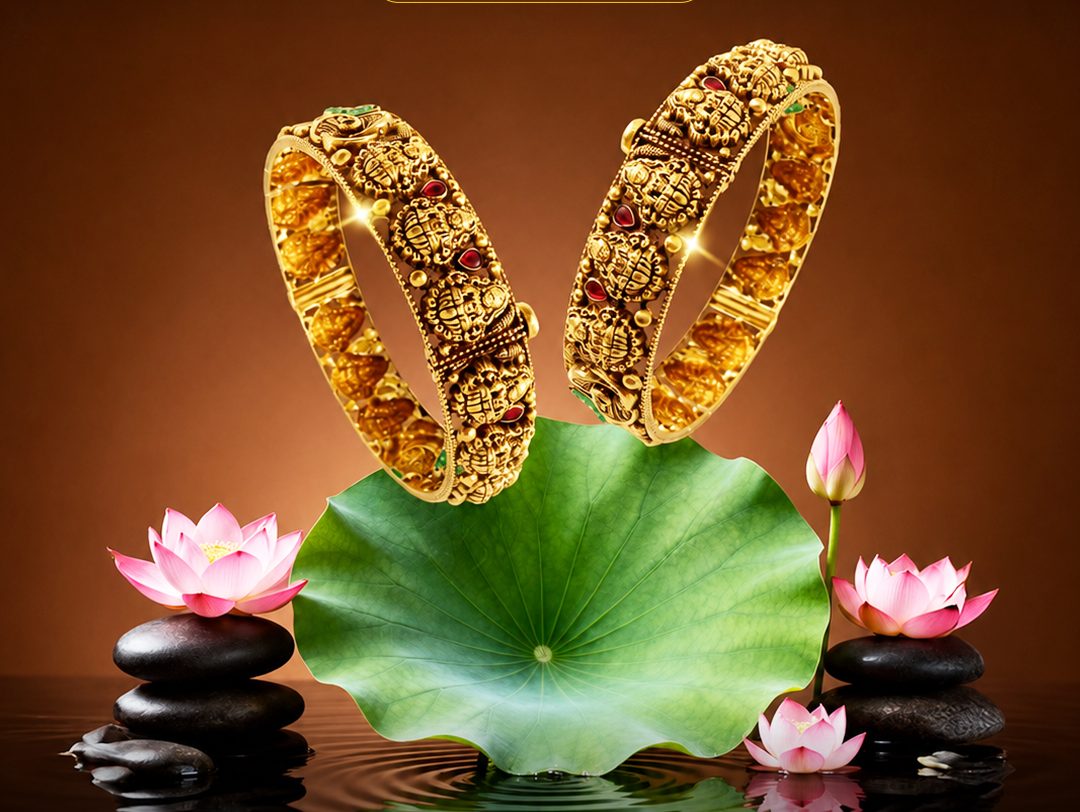
Temple jewellery originated centuries ago as ornamentation crafted for deities in South Indian temples, particularly across Tamil Nadu, Andhra Pradesh, and Kerala. Artisans used high-purity gold, intricate filigree work, and motifs inspired by gods, goddesses, peacocks, lotus flowers, and temple architecture. Over time, these designs moved from temple sanctums to royal courts, and eventually into mainstream bridal and festive wear.
What has kept temple jewellery design trends alive for generations is their unmatched craftsmanship. Every piece — whether a choker, jhumka, or vanki armlet — carries symbolic weight along with visual grandeur. Rubies, emeralds, and uncut diamonds (polki and kundan) are often paired with gold to intensify the richness. This style became a staple for South Indian weddings and continues to dominate as one of the most requested design trends during the wedding season.
In recent years, temple jewellery has surged back into the spotlight, driven largely by Bollywood and South Indian cinema, celebrity styling, and a renewed cultural pride in heritage craftsmanship. Younger buyers who once associated temple jewellery with “occasion-only” wear are now embracing it as an everyday statement piece, redesigned in lighter, more wearable formats. This shift itself reflects one of the most important design trends shaping the gold jewellery industry today: heritage aesthetics reimagined for modern lifestyles.
Why Gold Design Trends Are Shifting Toward Minimalism
While temple jewellery represents maximalism at its finest, an equally powerful counter-movement has been building — contemporary minimal gold jewellery. This shift is being driven by several factors that are reshaping design trends across the industry.
1. Changing lifestyle needs. Modern buyers want jewellery that transitions easily from work to weekend. Bulky, ornate pieces don’t always fit a fast-paced lifestyle, so sleek, lightweight gold jewellery has become one of the most sought-after design trends among working professionals and younger consumers.
2. Rising gold prices. As gold rates climb, buyers are prioritizing design over grams. Minimalist pieces let jewellers create visually striking items using less metal, making this one of the more economically-driven design trends in the current market.
3. Global design influence. Scandinavian minimalism, Japanese wabi-sabi principles, and international luxury branding have all influenced Indian gold design trends, pushing the industry toward clean lines, geometric shapes, and negative space.
4. Everyday wearability. Unlike temple jewellery, which is often reserved for special occasions, minimal gold pieces are designed for daily wear — thin chains, small pendants, stackable rings, and delicate hoops. This “everyday luxury” mindset is now one of the defining design trends of the decade.
5. Social media and personal branding. Instagram and Pinterest have amplified minimalist aesthetics, with influencers showcasing understated gold jewellery as part of a “quiet luxury” movement — another design trend with massive traction among Gen Z and millennial buyers.
Key Gold Design Trends Bridging Temple and Minimal Styles
The most exciting part of today’s jewellery landscape isn’t the divide between temple and minimal styles — it’s the fusion. Designers are actively blending old-world symbolism with new-world simplicity, and this fusion has become one of the standout design trends of recent years.
1. Miniaturized Temple Motifs
Instead of large temple chokers, jewellers are now creating dainty pendants and earrings featuring scaled-down temple motifs — a small goddess coin, a subtle peacock outline, or a tiny lotus. This design trend allows buyers to carry cultural symbolism without the visual weight of traditional temple pieces.
2. Matte and Brushed Gold Finishes
Traditional temple jewellery favored high-shine, antique gold finishes. Today, matte and brushed textures are among the fastest-growing design trends, offering a more subdued, sophisticated look that pairs well with both ethnic and western outfits.
3. Geometric Reinterpretations of Temple Architecture
Some of the boldest contemporary design trends draw inspiration from temple gopurams (towers) and pillars, translating their architectural lines into geometric pendants, cuffs, and rings — a clever nod to heritage without literal ornamentation.
4. Layered Minimalism
Layering thin gold chains of varying lengths has become a dominant styling trend. It allows wearers to build a personalized look while staying within the minimalist design language — proving that minimalism doesn’t have to mean “just one piece.”
5. Sustainable and Lightweight Gold
With sustainability becoming a bigger conversation in the jewellery industry, lightweight gold design trends are gaining traction not just for affordability, but also for reducing metal wastage in production — an increasingly important consideration for eco-conscious buyers.
6. Convertible and Modular Jewellery
A newer design trend gaining popularity is convertible jewellery — pieces where temple-style detachable elements can be removed to reveal a simpler, minimal base design. This gives buyers versatility: an ornate look for weddings and a pared-back version for daily wear, all from a single investment piece.
How Contemporary Minimal Design Trends Reinterpret Temple Symbolism
It’s worth understanding how designers translate deeply symbolic temple elements into minimal aesthetics without losing meaning. A few techniques define this evolving design trend:
- Outline over detail: Instead of fully sculpted deity figures, designers use fine linework to suggest form, keeping the silhouette recognizable while dramatically reducing visual bulk.
- Single-motif focus: Rather than combining multiple temple elements (peacocks, lotus, deities, floral borders) into one piece, minimal interpretations isolate a single motif as the hero design element.
- Negative space: Modern goldsmiths use open, uncluttered space around motifs to create a sense of lightness — a hallmark of contemporary design trends across jewellery, fashion, and interior design alike.
- Mixed metal pairing: Some designers pair yellow gold temple motifs with rose gold or white gold bases, adding a contemporary edge while preserving the cultural core of the design.
This blending approach explains why so many buyers today aren’t choosing between temple and minimal jewellery — they’re choosing pieces that represent both, wearing heritage in a modern language.
What to Look For When Buying Gold Jewellery Amid These Design Trends
If you’re planning a purchase and want a piece that reflects current design trends while staying versatile, here’s what to prioritize:
- Purity and hallmarking. Regardless of design trends, always verify BIS hallmarking and purity certification before purchasing gold jewellery.
- Occasion versatility. Look for pieces that can transition between festive and everyday wear — this is central to why fusion design trends have become so popular.
- Weight and comfort. Lightweight designs are not just a trend; they’re a practical shift toward jewellery that can be worn for longer durations without discomfort.
- Craftsmanship over size. With minimal design trends, the value lies in precision and finish rather than sheer volume of gold — so examine detailing closely.
- Timelessness. The best jewellery investments follow design trends that have staying power — motifs and finishes that won’t feel dated in five or ten years.
The Road Ahead: Where Gold Design Trends Are Headed Next
Looking forward, the jewellery industry is likely to see even deeper convergence between heritage and minimalism. Expect design trends such as:
- AI and CAD-assisted custom design, allowing buyers to personalize temple motifs into minimal formats tailored to their preferences.
- Gender-neutral gold jewellery, with simplified temple-inspired pieces designed for men, expanding beyond traditional bridal-only positioning.
- Regional motif revival, where design trends move beyond South Indian temple art to include motifs from other cultural traditions across India, reinterpreted minimally.
- Digital-first shopping journeys, where augmented reality try-ons help buyers visualize how fusion design trends will look before purchase.
Final Thoughts
The journey from temple jewellery to contemporary minimal design is less a departure from tradition and more an evolution of it. As design trends continue to shift, what remains constant is the emotional and cultural significance gold jewellery holds for buyers. Whether you gravitate toward the grandeur of temple-inspired pieces or the understated elegance of minimalist gold, both paths lead back to the same craftsmanship and heritage that has defined Indian jewellery for generations.
For jewellery brands and buyers alike, staying aware of these design trends isn’t just about aesthetics — it’s about understanding how culture, lifestyle, and craftsmanship continue to reshape what gold jewellery means today.
The journey from temple jewellery to contemporary minimal design is less a departure from tradition and more an evolution of it. As design trends continue to shift, what remains constant is the emotional and cultural significance gold jewellery holds for buyers. Whether you gravitate toward the grandeur of temple-inspired pieces or the understated elegance of minimalist gold, both paths lead back to the same craftsmanship and heritage that has defined Indian jewellery for generations.
For jewellery brands and buyers alike, staying aware of these design trends isn’t just about aesthetics — it’s about understanding how culture, lifestyle, and craftsmanship continue to reshape what gold jewellery means today.
At Alukka Gold Palace, this philosophy comes alive across our collections — from intricately crafted temple jewellery rooted in tradition to sleek, contemporary minimal pieces designed for everyday elegance. Whichever design trend speaks to you, our collection reflects the same commitment to purity, craftsmanship, and timeless value.