Essential Gold Jewellery Every Bride Should Consider
A wedding is one of the few occasions where tradition, emotion and investment meet in a single purchase. Gold has been part of that story for generations. It is worn on the big day, passed down to daughters, and kept safe as a store of value. If you are planning a wedding in the capital, you also want to know where to buy it. Searching for the best jewellers in Delhi is the starting point for many families, and the city offers plenty of choice, from the old lanes of Chandni Chowk to the busy showrooms of Karol Bagh and the neighbourhood markets across the Yamuna.
This guide covers the essential gold jewellery every bride should consider, what each piece means, how to choose wisely, and how to find a trustworthy jeweller, including how to shortlist the best jewellers in East Delhi.
Why Gold Remains the Heart of Bridal Jewellery
Fashion changes every season, but gold has stayed constant in Indian weddings. There are three reasons.
Cultural significance. Gold is associated with prosperity and good fortune. Many rituals involve gifting or wearing it, and a bride’s gold is often seen as her streedhan, wealth that stays with her.
Lasting value. Unlike most wedding purchases, gold holds its worth. A well-chosen necklace or set can be resold, exchanged, or remade into something new decades later.
Versatility. Gold suits every skin tone, every outfit and every regional style, from a Punjabi bride’s heavy kundan-meena sets to a South Indian bride’s temple jewellery to a minimalist modern look.
With that in mind, here are the pieces that form the backbone of a bridal collection.
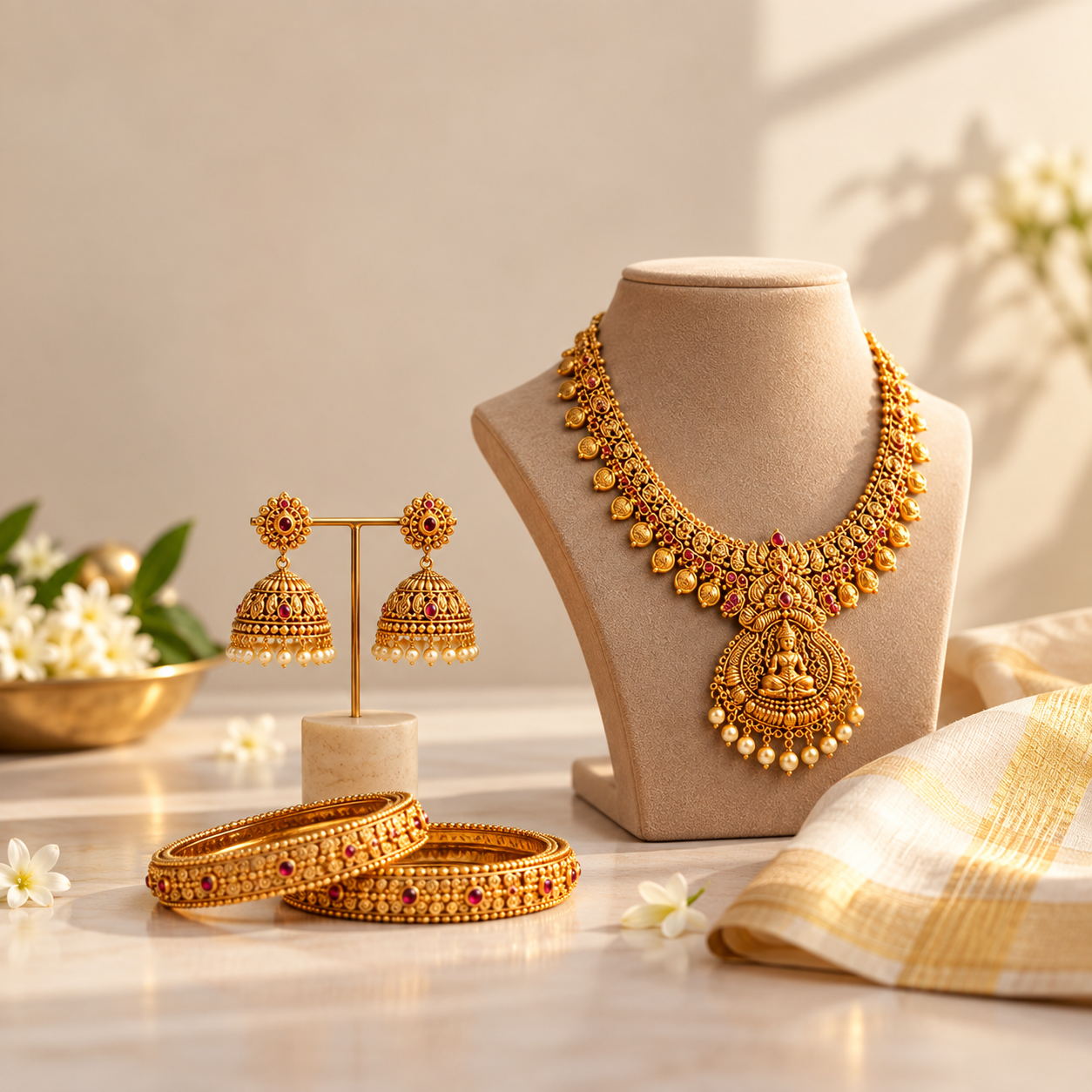
1. The Necklace Set: The Centrepiece
If one piece defines a bridal look, it is the necklace. Most brides choose a combination of two or three layers.
Choker. A close-fitting necklace that sits at the base of the neck. It works beautifully with deep-neck blouses and lehengas and is a good option if you want a statement without extra weight.
Rani haar. A long, multi-layered necklace that falls to the waist or chest. It is traditional, dramatic and very photogenic. Rani haars are often paired with a shorter choker for a layered effect.
Matching earrings. A bridal necklace set usually includes earrings and sometimes a maang tikka. Buying them together ensures the design language, motifs and finish match perfectly.
Tip: Think about your outfit before you finalise the set. A heavily embroidered lehenga pairs best with simpler gold, while a plain silk saree can carry a bold, ornate necklace.
2. Bangles and Kadas: The Sound of a New Beginning
Bangles are among the most meaningful items in a bride’s collection. They are also practical, because they can be worn daily after the wedding, unlike some heavier pieces.
Traditional gold bangles. A set of four to six on each wrist is a classic bridal look. Choose slightly different widths for visual interest.
Kadas. Broader, bolder bangles with intricate carving. Popular in North Indian weddings, they look striking on their own or stacked with slimmer bangles.
Chooda alternatives. Many brides wear the traditional red and ivory chooda for the ceremony and gold bangles alongside it. Others choose a gold-only look for the reception.
Tip: Get your wrist measured properly by the jeweller. Bangles that are too tight are uncomfortable on a long wedding day, and too loose ones slide around and catch on fabric.
3. Maang Tikka and Matha Patti: Framing the Face
Head jewellery draws attention to your face and defines your bridal portraits.
Maang tikka. A single pendant that rests at the centre parting and falls on the forehead. It is elegant, lightweight and goes with almost any hairstyle.
Matha patti. A more elaborate version with chains running along the hairline. It suits brides who want a regal, traditional appearance.
Passa and jhoomar. Side ornaments worn on one side of the head, popular in Hyderabadi and Punjabi styles.
Tip: Try these on with your actual hairstyle and dupatta. A tikka that looks perfect in the showroom can sit differently once your hair is set and your veil is pinned.
4. Earrings: Small Pieces, Big Impact
Earrings can be the most underestimated part of a bridal ensemble. They frame your face and complement the necklace.
Jhumkas. Bell-shaped drops that never go out of style. They are comfortable, graceful and suit both ethnic and fusion outfits.
Chandbalis. Crescent-shaped earrings with a regal feel, often paired with lehengas.
Studs. Simple gold studs are perfect for the days after the wedding and for everyday wear.
Tip: If you are wearing a heavy necklace and a maang tikka, choose lighter earrings so the overall look stays balanced. Heavy earrings can also cause discomfort over many hours.
5. Nose Ring (Nath): A Regional Favourite
The nath is a defining piece for brides in Maharashtra, Rajasthan, Gujarat and other regions, and it has grown in popularity across India.
Traditional nath. A large ring, often with pearls and a chain that connects to the hair.
Smaller nose pins and rings. For brides who prefer subtlety, a delicate gold ring or stud works just as well and is easy to wear.
Tip: If you do not have a pierced nose, many jewellers offer clip-on versions that look authentic and are comfortable to wear.
6. Waist Belt (Kamarbandh): Tradition with a Modern Return
Waist belts were once a staple of the traditional bride and are now back in fashion. They add structure to a lehenga or saree and look excellent in photographs.
Choose a design that matches your necklace motifs for a cohesive look. A belt in a finer pattern can be dressed up or down depending on your outfit.
7. Rings and Finger Jewellery
An engagement ring and wedding band are obvious choices, but there is more to consider.
Cocktail rings. Statement rings that look beautiful with bridal outfits.
Hathphool. A hand ornament connecting a ring to a bracelet by delicate chains. It adds drama and is gaining popularity among modern brides.
Tip: Choose rings you can wear after the wedding. A comfortable, well-proportioned design will be worn far more often than an oversized showpiece.
8. Anklets (Payal): The Final Touch
Though often overlooked, anklets complete the bridal look. Gold anklets are less common than silver because of cost, but some families choose them for their symbolic value. If you want something lighter, consider a gold-plated or silver design with gold accents.
9. Mangalsutra: The Most Personal Piece
For many brides, the mangalsutra is the most emotionally significant item of all. It symbolises marriage and is worn daily by many women.
Designs vary by region, from a simple black bead chain with a gold pendant to a more elaborate piece. Modern brides increasingly choose lighter, contemporary versions that can be worn with Western outfits as well as traditional wear.
Tip: Think about daily wear when choosing. A design that is too heavy or elaborate may end up in the locker instead of on your neck.
How to Build a Balanced Bridal Collection
Buying every piece in the same heavy style is a common mistake. A smarter approach is to plan the collection across occasions:
- Wedding ceremony: The heaviest and most traditional pieces, such as a rani haar, matha patti and full bangle set.
- Engagement and sangeet: Lighter but still festive sets, such as chokers, jhumkas and statement rings.
- Reception: Contemporary or polki-inspired designs.
- Everyday and post-wedding: Light chains, studs, bangles and a simple mangalsutra.
Mix these across the budget rather than putting everything into a single heavy set. You will get far more use from your jewellery.
Choosing the Right Gold: Purity and Hallmarking
Before you pick a design, understand what you are buying.
22K vs 18K. 22-carat gold is the traditional choice for Indian bridal jewellery, with a rich colour and high purity. It is softer, though, so intricate designs with stones are often made in 18K for durability.
BIS hallmarking. Always check for the BIS hallmark, which certifies purity. Hallmarking is mandatory in India, and a reputable jeweller will be happy to explain the marks on each piece.
Making charges. These vary widely by design and jeweller. Intricate handcrafted work costs more than machine-made pieces. Ask for a full breakdown of gold weight, making charges, stone charges and GST.
Stone weight. For pieces with stones, ask the jeweller to separate the weight of the stones from the gold, so you know exactly what you are paying for.
How to Find the Best Jewellers in Delhi
Delhi is one of the best cities in the country for gold jewellery, with a huge range of traditional family-run stores, modern showrooms and large brands. Choosing among them takes a little homework. Here is what to look for.
Reputation and history. Established jewellers who have served families for years have a reputation to protect. Ask relatives and friends for recommendations, and read recent customer reviews.
Transparent pricing. The best jewellers in Delhi give detailed itemised bills and are open about making charges, wastage and the current gold rate.
Certified purity. Look for BIS hallmarked jewellery and proper certification for any diamonds or gemstones.
Variety of designs. A good showroom has both traditional and contemporary collections, and often offers custom design services for brides with specific ideas.
After-sales policy. Check the buyback and exchange terms in advance. Understand how the jeweller values old gold, and whether there are deductions.
Customisation. Many brides want a piece adapted to their outfit or family design. A jeweller who offers custom work and clear timelines is valuable, especially when wedding dates are fixed.
Finding the Best Jewellers in East Delhi
For families living in or around the Yamuna side of the city, the best jewellers in East Delhi offer a major advantage: convenience. Areas such as Laxmi Nagar, Preet Vihar, Karkardooma, Shahdara, Vivek Vihar, Mayur Vihar and Patparganj have established jewellery showrooms. Shopping locally means you avoid long cross-city trips and heavy traffic, which matters when you have multiple visits for selection, trials, measurements and final pickup.
When shortlisting local options, keep these points in mind:
- Visit more than one showroom. Compare designs, rates and making charges before deciding.
- Ask about customisation. East Delhi jewellers often have skilled karigars who can recreate family designs or modify existing ones.
- Check wedding packages. Some showrooms offer bridal packages with a combination of pieces, sometimes with better pricing on bulk purchases.
- Read recent reviews and visit in person. Online ratings are a useful starting point, but seeing the quality and service yourself tells you more.
- Ask for references. A good jeweller will happily connect you with satisfied customers.
Whether you choose a showroom in East Delhi or travel to a larger market elsewhere in the city, the principles stay the same: purity, transparency, trust and a design that feels like you.
Practical Tips Before You Buy
Start early. Customised bridal jewellery can take several weeks. Begin shopping at least three to four months before the wedding.
Set a budget. Decide your total spending and the split between heavy and light pieces before you walk into a showroom.
Track gold rates. Gold prices fluctuate. Some families buy in stages to average out the cost, or use gold savings schemes offered by reputable jewellers.
Get everything in writing. Keep the bills, hallmark details and any buyback agreements safe.
Insure and store safely. After the wedding, store the jewellery in a bank locker or a secure home safe. Consider insurance for high-value sets.
Try everything with your outfit. Bring your lehenga, saree or a swatch of the fabric to the showroom so you can see how the jewellery looks with it.
Final Thoughts
Bridal gold is about more than adornment. It carries family memory and a sense of beginnings. The essential gold jewellery a bride should consider includes a statement necklace, bangles or kadas, a maang tikka, earrings, a mangalsutra and, depending on tradition, a nath, kamarbandh and rings. Together they form a collection that works for the wedding day and for the years that follow.
Choose pieces you love and will actually wear, buy from a jeweller you trust, and verify purity and pricing before you commit. Whether you pick one of the best jewellers in Delhi or a well-regarded showroom in your own East Delhi neighbourhood, take your time, ask questions and enjoy the process. The right jewellery will make you feel confident and beautiful on your wedding day, and it will stay with you long after.