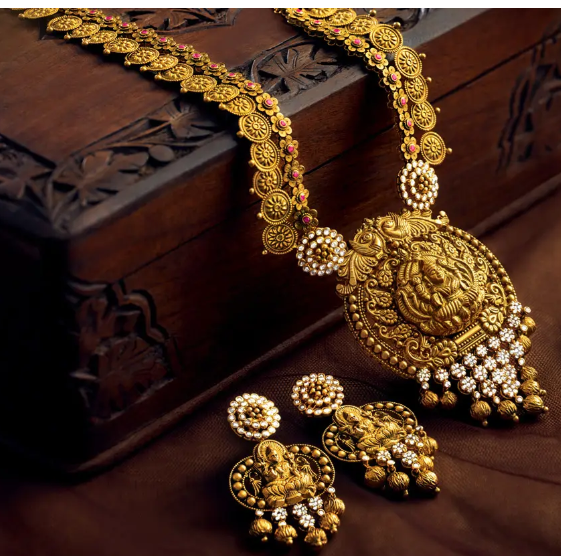
Gold Jewellery as an Investment: Is It Still Worth It in 2026?
Gold has always occupied a special place in Indian households — part adornment, part heirloom, part safety net. But as prices touch new highs and financial advisors push mutual funds, ETFs, and digital gold, a fair question comes up every wedding season and every Akshaya Tritiya: is gold jewellery still a smart investment in 2026, or has it become an emotional purchase that happens to carry a price tag?
This blog breaks down where gold jewellery stands as an investment class today, how it compares with other gold-based options, and what you should actually think about before your next purchase.
Why Gold Investment Is Back in the Spotlight
2025 was an extraordinary year for gold. Prices hit dozens of record highs, and by the end of the year the metal had delivered returns strong enough to outshine most conventional asset classes. That momentum carried into 2026, with gold opening the year near record levels and continuing to see sharp swings — surging on geopolitical tension, cooling on rate expectations, then surging again.
For anyone tracking gold as an investment, this volatility is actually the headline story. Central banks across the world have kept buying gold to diversify their reserves. Investors nervous about currency weakness, inflation, and global uncertainty have poured money into gold-backed funds and bars. All of this has pushed India’s gold demand to be increasingly investment-led rather than purely ornamental, even though jewellery still accounts for the bulk of household gold holdings.
In other words, the “gold is a safe investment” idea isn’t just a cultural belief anymore — it is playing out in real market behaviour, in India and globally.
Gold Jewellery vs Other Forms of Gold Investment
Before deciding whether jewellery deserves a place in your investment portfolio, it helps to see how it stacks up against the alternatives.
1. Physical Gold Jewellery
This is the most familiar form of investment for Indian families. It is tangible, wearable, and deeply tied to tradition — weddings, festivals, and gifting all keep the demand for jewellery strong regardless of what the price chart is doing.
However, as a pure investment, jewellery carries real costs that other forms don’t:
- Making charges: Typically 8–25% of the value, depending on design complexity. This amount is rarely recovered when you sell.
- GST: Adds to the upfront cost.
- Purity and resale friction: Buying from a trusted jeweller with proper hallmarking matters enormously, since resale value depends on verified purity.
- Wear and design depreciation: Old designs may need remaking, adding further cost.
So while the gold content itself appreciates with market prices, the “investment return” on jewellery is always lower than the return on the metal price alone, because a chunk of what you pay never comes back.
2. Gold Coins and Bars
Coins and bars carry lower making charges (or none at all) and are purpose-built for investment rather than display. If your primary goal is capital appreciation, this is a more efficient investment route than ornate jewellery — though you lose the ability to wear or gift it in the same way.
3. Sovereign Gold Bonds (SGBs) and Gold ETFs
These paper and digital forms of gold investment have grown popular precisely because they strip out making charges and storage risk. SGBs additionally pay a small annual interest on top of gold’s price appreciation, and gains held to maturity get favourable tax treatment. Gold ETFs offer liquidity and are easy to buy and sell through a demat account.
For someone purely optimizing for investment returns, SGBs and ETFs generally outperform jewellery, rupee for rupee. But they don’t serve the emotional, cultural, and gifting role that jewellery does — and that’s a real factor for most Indian buyers, not just a sentimental afterthought.
4. Digital Gold
Digital gold platforms let you buy small amounts of 24K gold online, which is later convertible into coins or jewellery. It’s a flexible entry point for smaller investment amounts but comes with its own storage and platform fees.
What’s Actually Driving Gold Prices in 2026
If you’re weighing a jewellery purchase as an investment, it helps to understand the forces behind this year’s price action:
- Interest rates: When central banks, especially the US Federal Reserve, hold rates steady or signal cuts, gold tends to benefit, since the opportunity cost of holding a non-yielding investment asset falls.
- The rupee-dollar exchange rate: Since gold is priced in US dollars internationally, a weaker rupee pushes up domestic prices even if global rates are flat.
- Geopolitical uncertainty: Conflict and global instability continue to drive safe-haven investment demand, often causing sharp short-term spikes.
- Central bank buying: Many central banks have kept accumulating gold reserves as a hedge against currency and geopolitical risk, adding a steady floor of demand.
- Import duty and policy changes: Domestic price and demand patterns in India are sensitive to changes in import duty on gold.
- Seasonal demand: The April–June period, especially around Akshaya Tritiya, remains India’s peak buying season, often generating enormous single-day sales volumes and putting short-term upward pressure on prices.
Taken together, most market watchers expect gold to stay broadly rangebound through 2026, with meaningful upside if global risks intensify, and the possibility of short-term corrections along the way. That’s a very different picture from a straight-line rally, and it matters for how you time any investment.
So, Is Gold Jewellery Still Worth It as an Investment in 2026?
The honest answer: it depends on why you’re buying.
If your primary goal is pure capital growth, gold jewellery is not the most efficient investment vehicle available today. Making charges, GST, and resale friction eat into returns that you could otherwise capture more cleanly through SGBs, ETFs, or gold coins. Anyone building a serious investment portfolio around gold should look closely at these paper and digital alternatives first.
If your goal includes cultural, ceremonial, or gifting value — which is genuinely the case for most Indian households — jewellery still makes sense, and dismissing it purely on investment-return grounds misses half the point. A wedding set, a festival purchase, or a family heirloom is never going to be judged only on ROI, and that’s fine. What matters is going in with clear eyes about the cost structure, rather than assuming jewellery will perform exactly like the gold price you see quoted in the news.
If you want the best of both, a blended approach works well for many families: hold a portion of your gold exposure in SGBs or ETFs for pure investment efficiency, and buy jewellery separately for the occasions that call for it — without expecting that piece to double as your investment vehicle.
Practical Tips for Anyone Considering Gold Jewellery as an Investment in 2026
- Buy from hallmark-certified jewellers. Purity certification protects your resale value and is non-negotiable for any investment-minded gold purchase.
- Compare making charges before you buy. They vary widely between designs and jewellers, and this is the single biggest drag on your effective investment return.
- Avoid trying to time the market perfectly. Given how volatile prices have been through 2026, staggered or need-based buying tends to work better than trying to catch the exact bottom.
- Keep receipts and certification documents. These matter enormously if you ever want to sell or exchange the piece later.
- Diversify your gold exposure. If investment growth is genuinely your goal, don’t put your entire gold allocation into ornate jewellery — split it across coins, SGBs, or ETFs as well.
- Watch the exchange rate and rate-cut cycle. These two factors alone explain much of gold’s short-term price movement this year, and they’re worth tracking if you’re planning a purchase.
- Think in years, not months. Gold has historically rewarded patient holders far more than short-term traders, and this cycle looks no different.
A Quick Look Back: Has Gold Investment Actually Paid Off?
It’s worth stepping back and looking at gold’s track record before deciding how it fits into your own investment plans. Over the past decade, gold in India has moved through phases of sharp acceleration (2020, driven by pandemic-era uncertainty) followed by long stretches of consolidation, and then fresh rallies whenever inflation or geopolitical risk resurfaced. Each time gold has hit a “record high,” commentators have asked whether the rally was over — and each time, a new cycle of investment demand has eventually pushed prices further.
This pattern matters for jewellery buyers specifically. Because jewellery locks in making charges at the time of purchase, an investment made during a price dip and held for several years tends to smooth out much of that upfront cost disadvantage. An investment made at a market peak, right before a correction, feels the making-charge drag much more acutely. This is exactly why financial advisors keep repeating the same advice: treat gold as a long-term investment, not a short-term trade, and avoid emotional buying at all-time highs just because prices are in the news.
It’s also worth remembering that gold’s role in a portfolio isn’t only about price appreciation. Even in years when equity markets or real estate have outperformed gold in pure return terms, gold has continued to serve as a stabiliser — the one investment that tends to hold or gain value when everything else is under stress. That defensive quality is a large part of why central banks and institutional investors keep adding to their gold holdings, even at elevated prices.
Frequently Asked Questions on Gold Jewellery Investment
Is gold jewellery a good investment in 2026? It can be, but with caveats. If you’re buying jewellery for a wedding, festival, or as a long-term family asset, it remains a reasonable investment choice, especially bought from a hallmark-certified jeweller. If your only goal is maximizing investment returns, gold coins, SGBs, or ETFs will generally do the job more efficiently.
How much of my portfolio should be in gold? Most financial planners suggest a modest allocation — commonly cited as somewhere between 5% and 15% of your total investment portfolio — as a hedge against inflation and market volatility, not as a primary growth engine.
Should I wait for gold prices to fall before buying jewellery? Given how volatile gold has been through 2026, trying to time the exact low is risky. A staggered buying approach, purchasing in smaller amounts across occasions rather than one large investment at a single price point, tends to reduce this timing risk.
Are Sovereign Gold Bonds better than jewellery for investment purposes? For pure capital growth, yes — SGBs avoid making charges entirely and add a small annual interest on top of gold’s price movement. Jewellery, however, offers utility and emotional value that SGBs simply don’t replicate.
Will gold prices keep rising through the rest of 2026? Most analysts expect gold to stay broadly rangebound over the remainder of the year, with upside potential if geopolitical or economic risks intensify, and the possibility of short-term pullbacks along the way. No forecast is guaranteed, which is exactly why gold should be treated as a long-term investment rather than a short-term bet.
The Bottom Line
Gold jewellery in 2026 sits at an interesting crossroads. Prices have been strong and volatile, investment demand globally has never been higher, and the cultural pull of jewellery in India remains as strong as ever. But jewellery and “pure investment gold” are not quite the same thing anymore — and treating them as identical is where a lot of buyers get their expectations wrong.
If you’re buying for love, tradition, or a milestone celebration, gold jewellery remains a meaningful and worthwhile purchase — just don’t expect it to outperform an ETF or bond. If you’re buying purely to grow wealth, look at your gold investment holistically, and let jewellery be the piece you buy for joy, not just for ROI.
Either way, gold isn’t going out of fashion as an investment idea in 2026 — it’s simply asking buyers to be a little more intentional about which form of gold actually serves their goals.
This blog is for general informational purposes only and should not be treated as investment advice. Please consult a certified financial advisor before making any investment decisions related to gold or other asset classes.