Physical Gold vs Digital Gold: What’s the Difference?
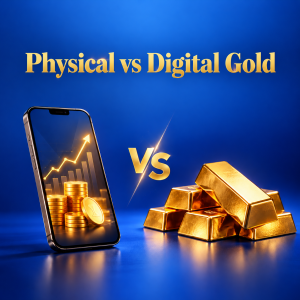 For generations, Indian families have bought gold the same way: walk into a trusted jeweller, haggle a little, and walk out with something you can hold. Weddings, Dhanteras, Akshaya Tritiya and the birth of a child have all been reasons to add a few grams to the family treasury.
Then smartphones arrived. Today you can buy a few hundred rupees’ worth of gold from a payment app while waiting for your chai to cool. No shop, no locker, no making charges. That convenience has made the debate around physical gold vs digital gold one of the most common questions among new and seasoned investors alike.
So which one is better? The honest answer is that they do different jobs. In this guide we break down what each one is, where each shines, the risks nobody mentions in the advertisements, and how to decide what belongs in your portfolio. We also look at essential gold jewellery pieces worth owning and how to pick the best jewellers in Delhi if you prefer to buy in person.
What Is Physical Gold?
Physical gold is gold you can touch. It comes in several forms:
- Jewellery: necklaces, bangles, chains, rings, earrings and mangalsutras.
- Coins: typically 24-karat, sold in denominations from 0.5 gram upwards.
- Bars and biscuits: usually bought in 10 gram, 50 gram or 100 gram sizes, mostly by investors who want the purest form with the lowest premium.
The biggest strength of physical gold is that it is real, tangible and entirely under your control. There is no platform, app or intermediary between you and your asset. In a country where gold doubles as a gift, a status symbol and an emergency fund, that tangibility matters.
The drawbacks are just as real. You pay making charges on jewellery, which can range widely depending on design complexity. You need to store it safely, usually in a bank locker or home safe, and you carry the risk of theft or loss. When you sell, jewellers deduct for wastage and purity testing, so the price you receive is often noticeably lower than the headline rate.
What Is Digital Gold?
Digital gold lets you buy gold online in tiny amounts, often starting from as little as one rupee, through apps and platforms. When you purchase, the provider says it buys an equivalent quantity of physical gold and stores it in a vault on your behalf. You see your holding in grams in the app, and most platforms let you sell at the prevailing rate or request physical delivery as coins.
The appeal is obvious:
- Low entry point: you can start with tiny amounts instead of saving up for a coin.
- Convenience: buy or sell at any hour from your phone.
- No storage worries: the provider handles vaulting.
- No making charges: you are buying gold value, not craftsmanship.
But digital gold is a different kind of product from what most people assume. You do not hold a legal title to a specific bar of gold. You hold a claim on a provider, and your security depends on how that provider operates. This is a crucial distinction we return to in the regulation section below.
Physical Gold vs Digital Gold: The Key Differences
Here is a side-by-side snapshot of how the two compare on the factors that matter most.
| Factor | Physical Gold | Digital Gold |
|---|---|---|
| Form | Jewellery, coins, bars | Electronic record of grams held |
| Minimum purchase | Usually a few grams or one coin | Very small amounts possible |
| Extra costs | Making charges, storage, insurance | Spread between buy and sell price, platform fees |
| Storage | You manage it (locker, safe) | Provider vaults it |
| Liquidity | Sell at a jeweller; deductions apply | Sell instantly in the app |
| Regulation | BIS hallmarking for purity | Largely outside direct securities regulation |
| Usability | Wear it, gift it, pledge it | Mainly an investment; delivery as coins possible |
| Emotional value | High | Low |
Neither column wins outright. Physical gold wins on usability, trust built over time and sentimental worth. Digital gold wins on convenience and accessibility. The right choice depends on why you are buying gold in the first place.
Cost: Where the Money Really Goes
Price is where many buyers make mistakes, so it is worth slowing down.
Physical gold carries layers of cost. For jewellery you pay the gold value, making charges (charged per gram or as a percentage), and GST on both. Making charges are the big variable. A plain chain might have modest charges, while an intricate bridal set can carry a much higher percentage. Those charges are generally not recovered when you resell. Gold coins and bars carr smaller premiums, which is why investors who care only about returns tend to prefer them over jewellery.
Digital gold has no making charges, but it is not free. Providers quote a buy price and a lower sell price, and the gap between the two is effectively your cost. GST applies on purchases as well. Because you are buying small quantities, it helps to check the spread rather than only the advertised rate. If you plan to hold for years, those small differences compound into something worth noticing.
A practical rule: if your goal is pure investment, compare the total cost of getting in and out. If your goal is wearing and gifting, accept that making charges are the price of craftsmanship, and focus on getting fair value and verified purity.
Safety, Purity and Regulation
This is the section most articles skip, and it is arguably the most important.
Physical gold: purity you can verify
In India, gold jewellery is covered by BIS hallmarking. Look for the BIS mark, the purity grade (for example 22K916 for 22-karat) and the six-character alphanumeric HUID code. Hallmarked jewellery gives you a verifiable standard, and you can check hallmark details through the BIS channels. Always insist on a proper bill that lists weight, purity, gold rate and making charges separately.
Digital gold: understand what you are trusting
Digital gold is sold through private platforms and does not fall under the same direct securities regulation that covers mutual funds or exchange-traded products. In late 2025, SEBI publicly cautioned investors that digital gold products sold on various platforms are not regulated by it and that it cannot offer the protections it provides for regulated products. If you want to review the specifics, check the latest SEBI notice before investing.
What does this mean in practice? Before buying digital gold, ask:
- Who is the actual vault custodian, and who audits the gold backing?
- Is the gold stored in your name or pooled?
- What happens to your holding if the platform shuts down?
- What are the buy-sell spread, fees and delivery charges?
If you cannot find clear answers, treat that as a signal. Many investors who want paperless exposure choose regulated alternatives such as gold ETFs or gold mutual funds instead, which sit inside a framework with disclosure rules and independent oversight. Sovereign Gold Bonds were another popular route, though new issuances have been limited, so check current availability.
Liquidity, Returns and Taxes
Both forms track the market price of gold, so before costs, price movement is similar. The difference lies in how easily and cheaply you can convert to cash.
Digital gold is generally faster to sell, often within minutes. Physical gold is liquid in a different sense: any jeweller in India will buy it, and you can also pledge it for a gold loan at short notice, something digital gold typically cannot do.
Taxation can be nuanced and changes with budgets, so confirm current rules with a tax professional. As a general idea, gains on physical gold and digital gold are treated as capital gains, with the rate depending on holding period. Regulated instruments such as ETFs may be taxed differently, which is another reason to check before you choose.
Essential Gold Jewellery Every Collection Should Have
If you lean toward physical gold, jewellery is the most meaningful way to hold it. Not every piece is equal as a store of value, though. Pieces with low making charges and high purity act as better savings, while heavily designed pieces are closer to wearable art.
Here is a list of essential gold jewellery pieces that earn their place in almost every collection:
- A gold chain: versatile, simple and easy to sell. Chains typically have lower making charges, which makes them a smart first purchase.
- Plain gold bangles: a staple for festivals and weddings. Choose simple designs for better resale value.
- Stud earrings: small, daily-wear pieces that go with everything.
- A mangalsutra or a pendant set: culturally significant and often the centrepiece of bridal jewellery.
- A classic ring: a plain band or a modest solitaire setting suits both occasions and everyday wear.
- Gold coins: not jewellery in the strict sense, but a clean, low-premium way to stack gold alongside your wearable pieces.
A balanced approach is to treat plain, high-purity pieces as your investment-grade jewellery and add statement pieces only when you love them, not because you expect them to appreciate.
How to Choose the Best Jewellers in Delhi
If you are buying in the capital, you are spoiled for choice. Delhi’s jewellery scene runs from the historic lanes of Chandni Chowk and Dariba Kalan to the busy showrooms of Karol Bagh, Lajpat Nagar and South Delhi markets, alongside well-known national chains. With so many options, the question is not where to find a jeweller. It is how to identify the best jewellers in Delhi for your needs.
Rather than relying on a list that may be sponsored or outdated, use these criteria:
- Hallmarking and transparency. A reliable jeweller sells BIS-hallmarked jewellery with HUID, and shows purity details without hesitation.
- Itemised billing. Gold value, making charges, stone charges and GST should be listed separately. Vague bills are a red flag.
- Clear buyback and exchange policy. Ask upfront what the jeweller deducts when you sell or exchange. Good shops explain this plainly.
- Reputation over time. Family-run businesses with decades of presence and chains with a long track record both build trust through repeat customers. Read recent reviews, not just old ones.
- Design range and customisation. If you want a bespoke piece, check whether the jeweller offers custom work and can show past examples.
- Fair making charges. Compare quotes across two or three shops for the same weight and design. Making charges are often negotiable, especially on larger purchases.
- Stone certification. If a piece includes diamonds or gemstones, ask for certificates from recognised labs.
Visit at least three shops before committing, bring your own idea of weight and budget, and never feel rushed by festive-season offers. The best jewellers welcome informed customers.
Smart Ways to Buy Gold: A Quick Checklist
Whichever route you choose, a few habits protect you:
- Check the day’s gold rate from a reliable source before walking into a shop or opening an app.
- Buy from regulated or established sellers. Reputation matters more with gold than with almost any other asset.
- Keep every bill and certificate. You will need them for resale, insurance and tax records.
- Diversify across forms. Many people hold some jewellery, a little in coins or bars, and a portion in a regulated paper-gold option.
- Think in percentages. Financial planners often suggest keeping gold as a modest slice of your overall portfolio rather than the whole of it.
- Insure high-value pieces, or store them in a locker.
Which Should You Choose?
There is no single winner in the physical gold vs digital gold debate, only a better fit for your situation.
Choose physical gold if you want to wear or gift it, value tangible ownership, plan for weddings or festivals, or want an asset that any jeweller will recognise. Prioritise hallmarked, simple designs if resale value matters.
Consider digital gold if you want to start small, like the idea of a no-storage option, and are comfortable with the platform risk after doing your homework. Keep amounts modest until you are confident in the provider.
Consider regulated alternatives such as gold ETFs or mutual funds if you want paperless exposure with stronger investor protections.
For many households, the most sensible approach is a blend: wearable gold for celebration and security, plus a small, carefully chosen paper or digital allocation for flexibility.
Frequently Asked Questions
Is digital gold safe? It can be convenient, but it is not regulated by SEBI like mutual funds or ETFs, so your safety depends on the provider’s custody and audit practices. Research the platform carefully.
Is physical gold a better investment than digital gold? Not necessarily. Coins and bars carry lower costs than jewellery, while digital gold avoids making charges. Compare the total cost of buying and selling for each option.
How do I check if gold jewellery is pure? Look for the BIS hallmark, the purity grade and the HUID, and ask for an itemised bill.
How do I find the best jewellers in Delhi? Compare hallmarking practices, billing transparency, buyback terms, reviews and making charges across several shops before deciding.
Final Thoughts
Gold has earned its place in Indian life because it is part wealth, part tradition and part security. Whether you choose a gleaming bangle from a trusted Delhi showroom or a few grams on your phone, the principle is the same: know exactly what you own, what it cost you, and how you will convert it back to cash.
Physical gold gives you something to hold and wear. Digital gold gives you flexibility and a low barrier to entry. Used thoughtfully, with essential gold jewellery as the heart of your collection and a reputable jeweller as your partner, they can complement each other rather than compete.